‘Everything that I put into the world is purely…unapologetically who I am’
The UK–Japan-rooted rapper reflects on his journey, from releasing four standout projects to evolving beyond trap, to redefining his sound and identity.
Today, UK rap is undoubtedly entering a new phase. The generation born in the late 1990s and early 2000s has experienced the COVID-19 pandemic, and British youth, strongly captivated by American hip-hop and meme culture of the 2000s, are now shaping their own distinct sound. Rather than being defined by their backgrounds, many of them absorbed music and culture through the internet and streaming during the pandemic, and it’s not uncommon for them to have started rapping as a means of self-expression. What feels new is that they’re not just drawing from hip-hop, but freely incorporating and reinterpreting pop culture references like Hannah Montana and Addison Rae alongside indie rock and alternative sounds. This kind of openness and creative freedom can also be seen in the rise of Victory Lap Radio, the London-based independent radio platform spotlighting the new generation of UK rap. Following that, the music video for ‘IS IT COOL?’ (2023), directed by LAUZZA — a key architect of the UK underground’s visual aesthetic — was also released. The boredom of the pandemic not only fueled the rise of these communities but also sparked a faint impulse toward music in young people who had been staring at their bedroom ceilings.
The same phenomenon occurred with Coults, an artist born and raised in North West London. With a mother from Osaka and a British father, he began releasing tracks during the 2021 lockdown and shot to fame with the viral hit single ‘F&F’ (the sped-up version has over 10 million streams on Spotify). While his first album, COULTURE and third album MEMBERS ONLY, showcased tough, cold-blooded street rap, many tracks since last year’s New Romantic have leaned heavily into New-Jazz, giving his rap a more laid-back vibe. Strongly influenced by US trap, his rap captivates listeners with a voice manipulated like an instrument and hard-hitting rhymes. Last year, he also performed at Rolling Loud, a hip-hop festival held in California, demonstrating his success extends far beyond the UK.
However, the path has by no means been an easy one. “I guess I could say that I was making music that was similar to everyone else’s in a sense, or because I felt like I was part of a scene.” says the 25-year-old rapper. Once an artist gains recognition in the scene, expectations inevitably follow. Growing up in an Asian immigrant family that values conformity often means being expected to follow a more conventional path. As an Asian mixed artist, a group often said to have few role models in the arts, the rapper, who grew up with a strict Japanese mother, reflects on how he carved out his path as a rapper.
Below, TURN spoke to the UK underground rapper who actively draws from Japanese culture in shaping his sound. Coults joins us from a London studio bathed in purple LED light, speaking in a relaxed manner and occasionally mixing in Japanese as he talks about the origins of his passion, the evolution of his sound, and what lies ahead. Through his words, an image emerges of an artist in the process of redefining his identity within the city of London, shaping a sound that is entirely his own.
Interview & Text by Nao Shimaoka
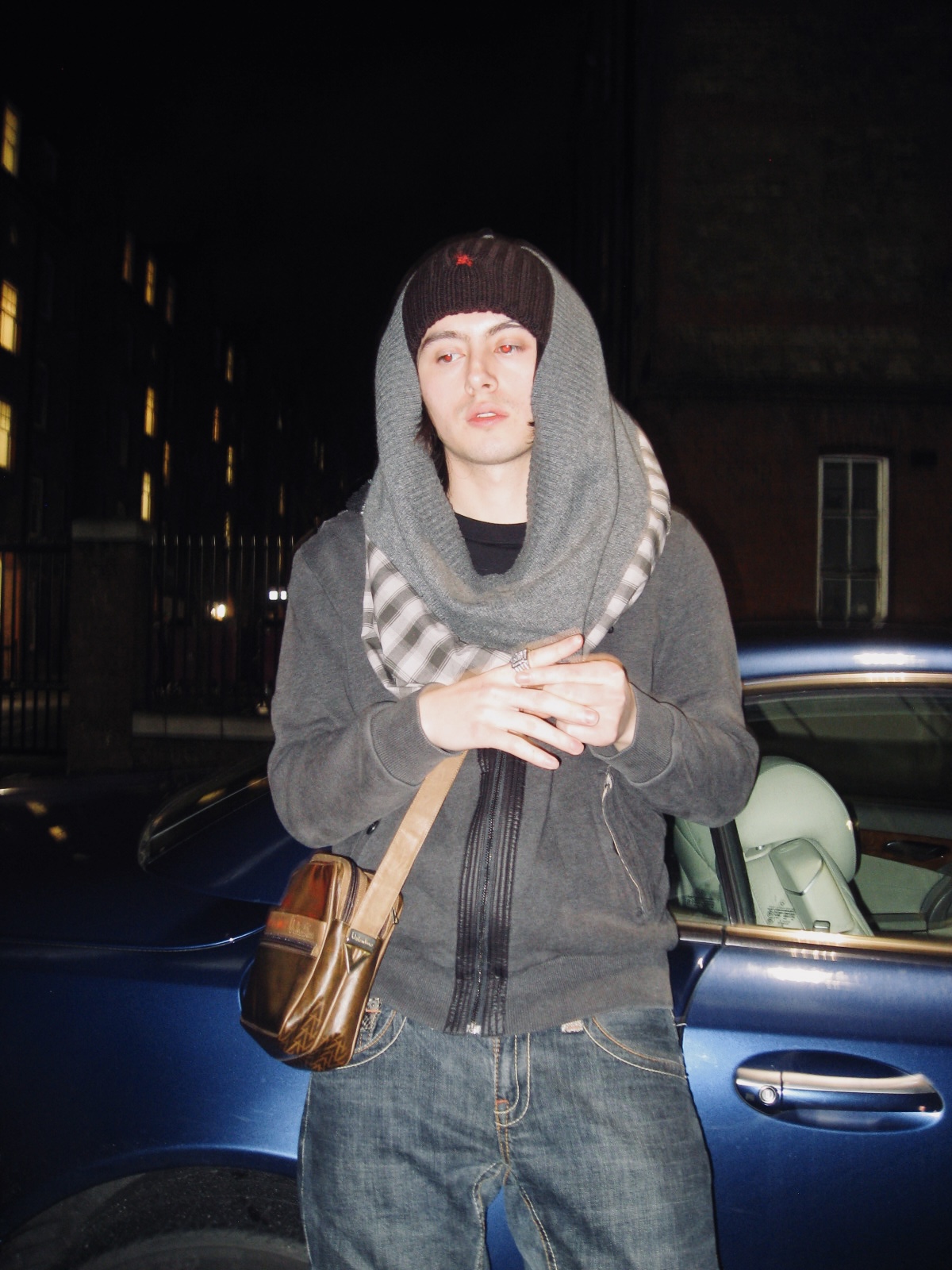
Interview with Coults
TURN: You mentioned that you had been in Osaka until yesterday. You have been coming to Japan quite often recently. What do you usually get up to when you’re here?
Coults: Since my mom is from Osaka, I spend time there with my family — especially my aunt and cousins. I love going to Kamakura too because my girlfriend is from Hawai’i and Kamakura kinda gives Hawaiian vibes so we both like to go there together.
You were born and raised in North West London. How would you describe the area and its vibe?
North West is very quiet and peaceful. A lot of fields and greenery. There’s not really much going on but I usually go into Central London or I go to East since a lot of studios are usually out there. Honestly, I’m not the biggest fan of London. The food is terrible here. I’m just bored here to be honest with you.
I noticed you also speak Kansai dialect, right?
Oh yeah. I speak Japanese with my mom, and she’s obviously Kansai. So she says things like “Akan,” or like the other day I had an eye infection so I said “Mebachiko,” but I didn’t know it’s actually “Monomorai,” right? I didn’t know that.
You were born to a British father and a Japanese mother. Growing up in London, what kinds of cultures were you exposed to?
I went to a Japanese nursery. That was just only for Japanese kids. But then my mom took me out of that because I think she was worried that I could speak Japanese better than English. I would say mainly Japanese culture, even the food I was eating, the stuff I would watch on TV, the toys I’m playing with. Even the food that my mom would pack for my lunch to school would be natto or other crazy things that other children would look at.
How did your friends at school react to natto?
They were like “What the fuck is this?” They would be so confused but I like natto.
I heard you were playing instruments from an early age through your mom. Did you grow up in a musical family?
Kind of. My dad used to play guitar and be in some punk band in the early 80s and my mom used to play the piano. She made me start music as a kid so I got into the cello and piano from a pretty young age.
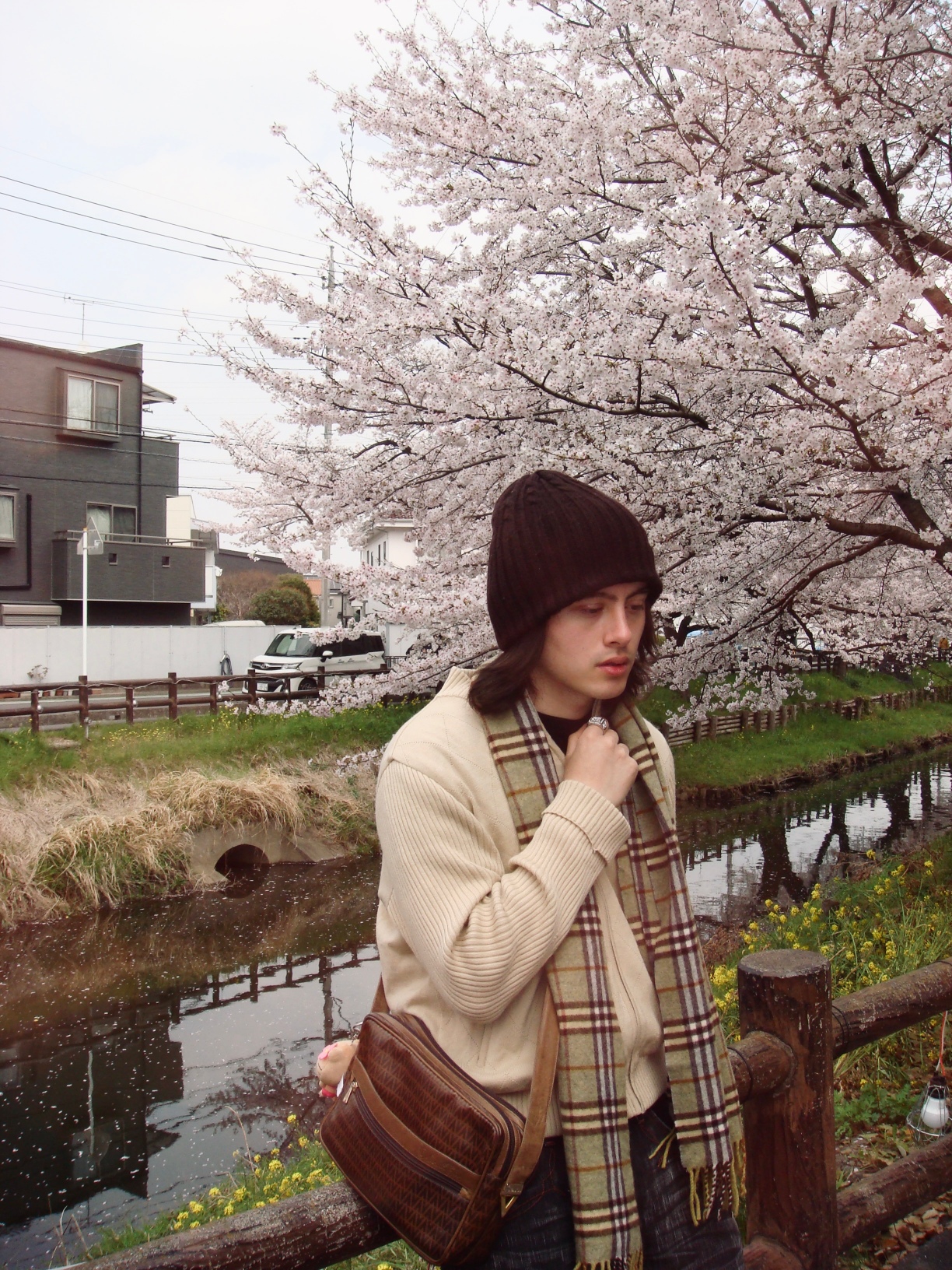
How did you get into rap music from there?
I was listening to a lot of classical music because that was the music that I had to play. But then after a while it got kind of boring for me and I started diving into other types of music. Sometimes my dad would show me old house music. I think I’m a product of my environment.
Do you remember a specific artist who got you into rap?
This might sound like a mainstream answer but my very first artist that I really was like “whoa, this guy is so good” was Travis Scott. I wasn’t listening to rap whatsoever until then but Rodeo hit me. I was listening to a lot of American music back then. I wasn’t listening to no UK music. Even me as someone who’s British, I couldn’t really listen to UK rap. I just thought it wasn’t really my thing. But that changed.
That’s interesting, because the 2010s were when grime was very popular. Is there any reason you didn’t resonate with it?
All my friends were listening to it, and they would relate to it. I just felt like I couldn’t relate to it enough. I like to relax, and a lot of that stuff is not relaxing for me.
What made you start rapping from there?
During COVID lockdown, I was super bored. At that time, Lancey Foux was starting to make a name for himself. That’s the first time I listened to a rapper from the UK, I was thoroughly surprised because I hadn’t really heard a sound like that before. I had obviously heard of a sound like that in America, but hearing it in the UK was new to me, honestly. There were artists like Nafe Smallz who were already doing that wave sound, but with Lancey it was a different planet. And I was like, let me just try some shit. The first year of making music, I didn’t release anything, I wasn’t taking it seriously at all. But in 2021, that’s when I started to release music.
Your track ‘F&F’ went viral in 2022, and from your Instagram posts it looks like you graduated from university in 2024. Does that mean you were still a student when you released your first album COULTURE?
Yes, I was a student when I made that song. I think it was my third year at university. I studied European languages and mainly French. I don’t know why, I don’t even speak French. I was in Paris in my third year but I left Paris, I hated it there. It wasn’t really my vibe.
How did you balance school life and your rap career?
I wasn’t really balancing it. I was very much like – music life over school life. I didn’t go to class. I just wasn’t really interested in my course at school.
Your latest album New Romantic, released last year, is a collaborative project with the LA-based producer Venny, who has worked with artists like Yeat, Ice Spice, and Cardi B. How did this collaboration come about, and what was the creative process like?
He had a viral TikTok sort of beat called ‘sour haribos.’ The distribution that was in charge of that song hit me and basically asked me to use that beat and make a new song. So I made a song called ‘Wyoming.’ Venny really liked it and then he sent me more beats. I feel like it made a lot of sense because even though he’s not Japanese, his sound reminds me of Japan. Even his producer tag is Japanese. When I went to LA last year for Rolling Loud, I met him and then we just recorded stuff together.
In your recent releases, there seems to be a lot of sounds and visuals inspired by Japan. It also feels like you’ve, in a way, distanced yourself from your earlier style.
It was just not who I am in a way. To the point where I didn’t feel comfortable. I could just tell that I was just trying to appeal to people and I should just try to appeal to myself. When I dropped ‘Wyoming,’ that song featured a whole verse in Japanese, and a lot of people were telling me, “why have you not done this before? Like, this is some shit that no one does.” I’ve always been reluctant to kind of put my culture to the table, just because…I just felt as though it wasn’t really that interesting, I guess. I think that was the wrong way of looking at it, because I think it’s just something that’s so different. It took me a couple of years to realize that.
On the track ‘Millionaire Shades,’ you open up about darker moments from your childhood and your mindset going into the future. It feels like a very vulnerable track.
I feel like there were a lot of people at the time that were kind of trying to focus on the things that I can’t do. I just felt like that track is just a massive “fuck you” to everyone that feels that way. They can see the success that you’ve achieved but they want to talk more about the stuff that you haven’t done but that’s the internet. There’s certain times in the past where I’ve just been like I’m tired of this, let me just say some shit. But recently I would say my music’s been a lot like happier vibes and that might be a testament to me being a happier person. Around 2023 and 2024, I probably wasn’t as happy as I am today. I was going through a lot of stuff surrounding myself with the wrong people sometimes.
It still feels like Asian representation in the UK rap scene is quite limited. As one of the few British-Japanese rappers, maybe even the only one, how do you feel about that?
I think I’m the only one for real.
What does it mean for you personally?
It’s cool to sort of almost be a ‘what-if’ for some people. Because I know how it is. We all know what Asian parents are like. Tiger moms and this and that. Japanese moms are quite kibishi (strict). I had a very strict mom when I was growing up too. So strict. The things that my mom would do for discipline, I don’t even think I can say it in an interview! But as I grew up, I was luckily able to start music. Within a year of starting music, I was seeing results. And I think my mom seeing that was a good thing. Because honestly, if I was doing music for five years, no results, I think my mom would have literally disowned me for real.
Your mom must be very proud.
Yeah, my mom is really supportive of everything now. Sometimes my music will play on the radio in London and my mom will turn the volume up and she’ll send me a screenshot or video.
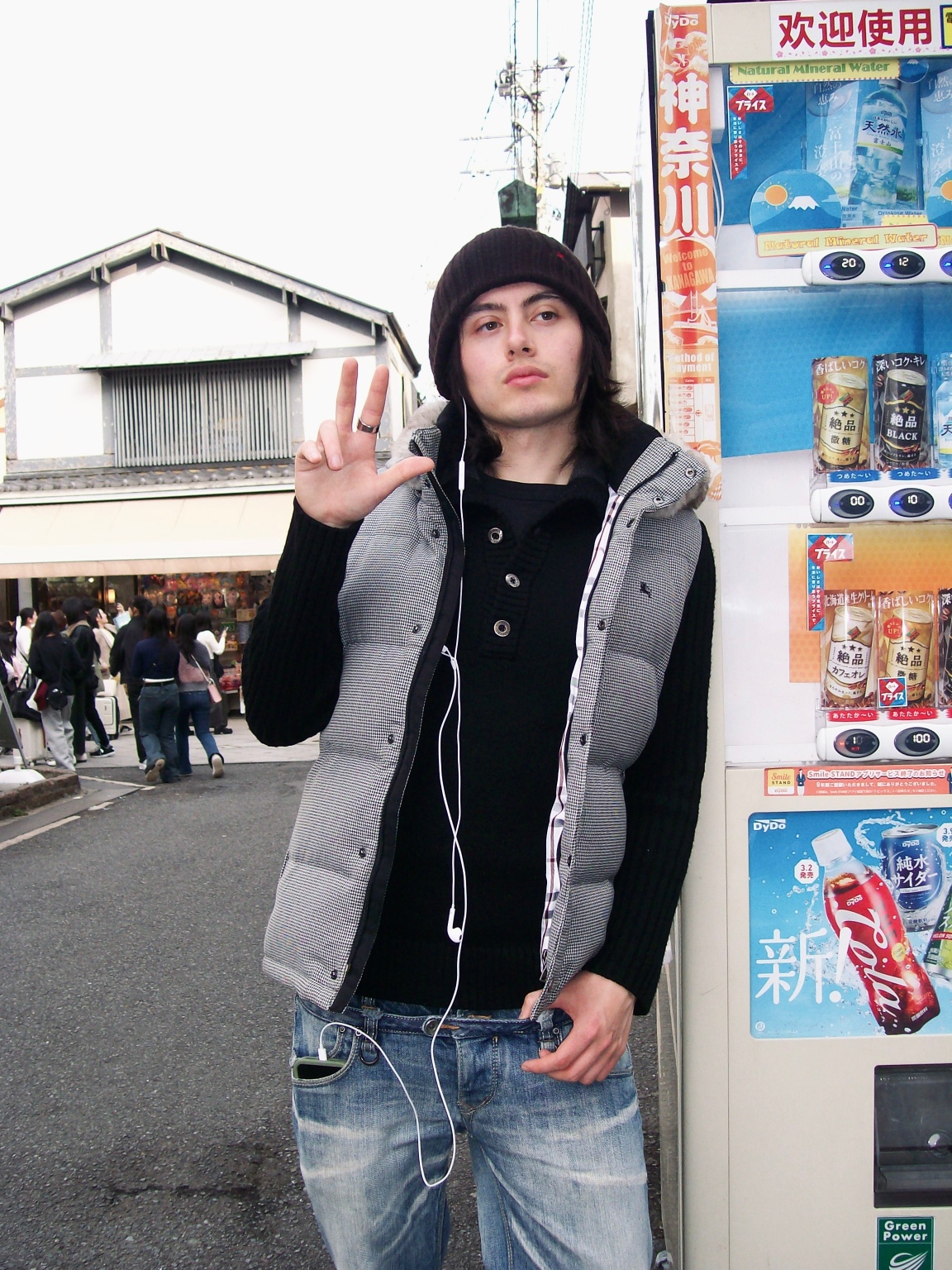
You performed at Rolling Loud in California last year. What was it like performing at a major hip-hop festival in the US as a UK rapper?
That was so crazy. Because that was something that I would watch on YouTube or TikTok and study the performances, and fantasise about, and I ended up doing it for real. I was also with a lot of people that I’m close with and they were able to come with me. It was a cool moment. I hope I can do it again.
You have also collaborated with UK artists like YT, Len and SINN6R. How do you see the UK rap scene these days?
The UK scene is on fire right now. I think in the US scene in recent years there’s been a lot of stuff I would call meme rap where it’s like… it’s music but it’s kind of a bit of a joke you know? I think a lot of Americans have gotten a bit tired of that, so they’re now turning to the UK for inspiration or enjoyment, especially since UK rap wasn’t nearly as popular in the US until a couple of years ago. Now you’ve got Drake bringing Fakemink out at Wireless Festival. Things have definitely changed.
Do you listen to Japanese Hip-Hop?
I love JUMADIBA. I think he’s so hard. He is a good friend of mine, we met a few years ago when he came to London. And my other friend Tade Dust. He’s super talented. We met up two weeks ago in Nakano when I was in Japan, and we recorded some tracks last year when he came to London. But I’m listening to the old stuff more. There’s this one artist from Japan that I love, her name is Hako Yamazaki. She’s from the 70s era,I love listening to her music.
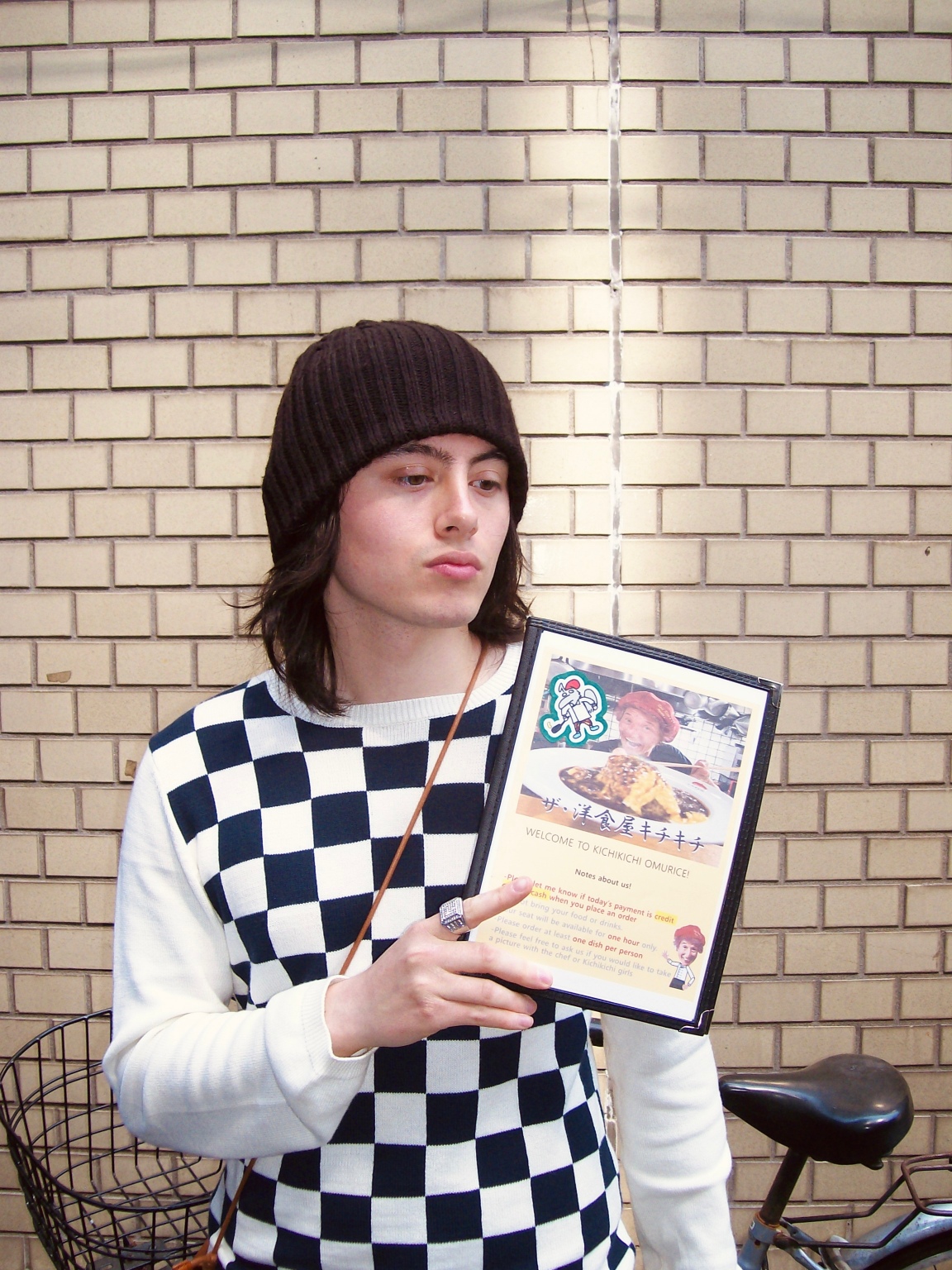
Your latest single, ‘Kichi Kichi,’ just dropped, and I heard the title actually comes from an omurice spot in Kyoto.
There is no crazy story behind why I named that song ‘Kichi Kichi.’ In the lyrics I said, “split racks down the middle like Kichi Kichi,” like that chef splits omurice in the middle. Then I had an idea of going to the restaurant and shooting a video for it.
I also heard you’re currently working on your next album.
The new project is called Homesick. That’s literally what the project is all about. It’s all about my desire to be back at home per se, which is Japan. I would say it’s my best work. I was obviously born in London and I’m very much a British person but day to day I wake up I’m eating Japanese breakfast, my mom’s watching NHK. It’s this weird mix of living here but I’m constantly indulging in Japanese media or just culture in general. I’m wearing Japanese jeans and a Burberry Black Label top right now. As he shows his outfit through his phone.
You have a song called ‘Kapital’ too.
Every time I want to buy some jeans, I go back to Japan and go straight to the Kapital store. It’s just that constant desire for me to be back there, you know? My dad doesn’t have much family left in the UK. I don’t have a grandma or a grandfather from my dad’s side. But I have a family out in Osaka and I’m very close to them.
When did you first start feeling that pull toward Japan?
It’s when I got closer with my family in Japan. I was living in Japan for about three years as a kid and I got super close with them but then I had to go back to the UK and then I started to kind of forget about Japan. But there were always photos and videos that I watched so I could look back on but I didn’t really feel too much of a connection because I didn’t really remember and I’ve got my friends in the UK now. But the older I got and the more I spoke with my family from Japan, I felt a need to connect a bit more.
It feels like you’re leaning more into your Japanese roots. Has there been a shift in your mindset or perspective behind that?
I guess I could say that I was making music that was similar to everyone else’s in a sense, or because I felt like I was part of a scene. I therefore had to conform to the type of music that was being made in that scene. But then I kind of had to step back and realize that the best thing to do is to bring my culture to the forefront. I feel like now anyone that listens to my music, they can’t really say that I’m lying about things, or I’m being someone that I’m not. It’s physically impossible to do that now, because everything that I put into the world is purely…unapologetically who I am.
Text By Nao Shimaoka