Evoking nostalgic parallel dancefloors
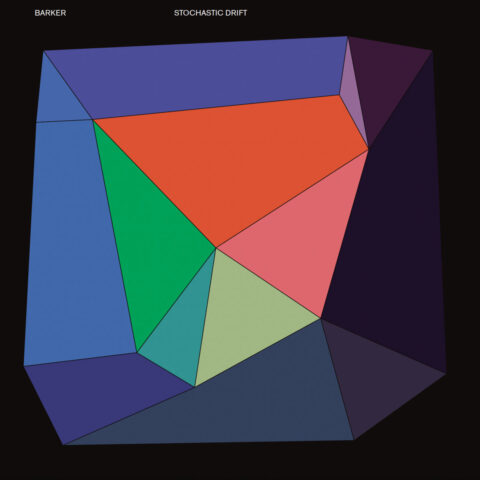
I don’t usually immerse myself in dance music albums with particular fervor,but there’s one album that has me quietly captivated. Berlin-based Barker’s latest album ‘Stochastic Drift’ may be one of those rare works that proves hypnotically engaging even for home listening.
Investigating this latest work—his first full-length album in six years since his first full-length album in six years since his debut ‘Utility’ (2019) —reveals a fascinating backstory. Created over a five-year period including the pandemic era, it was completed through a series of “highly significant and unpredictable events.” While Barker once gained attention for his “drumless techno” approach on the ‘Debiasing’ EP (2018) , which eliminated kick drums entirely, this latest work adopts a much broader sonic palette. Critics have described it as integrating influences from Eno, SND/Mark Fell, Aleksi Perälä, Hiroshi Yoshimura, Sasha, and Photek into a distinctive sound all his own.
Personally, however, the unpredictable evolution of soundforms that refuse to settle in one place reminds me of Max Cooper’s ‘Unspoken Words’ (2022). Or perhaps it’s comparable to the experimental spirit shown in Four Tet’s career-defining ‘New Energy,’ (2017) or the editing prowess that Bonobo demonstrated on his already highly accomplished debut ‘Animal Magic’ (2000) —creating something smooth enough for lounge listening while maintaining experimental depth. I sense similar producer talent at work here.
This must be intentional. What’s particularly striking is that while the BPM ranges widely from 80 to 140, kick drums rarely take center stage. Despite being dance music, it’s liberated from traditional kick-centered structures. Listening to the trancey soundforms that sparkle throughout M2 “Reframing,” I find myself naturally pacing around the room, moving to the rhythm. The rhythm certainly exists, but rather than floor-pounding impact, it provides a more floating, ethereal propulsion. Meanwhile, M5 “Positive Disintegration” unfolds with downtempo, glitchy textures—though careful listening reveals the BPM hasn’t actually dropped that much. M7 “Fluid Mechanics” features live bass, with drums and cymbals faintly echoing in the background with an organic quality.
Then comes the album’s title track “Stochastic Drift,” approaching with fierce intensity. Rather than straight swing or bebop, it possesses the experimental, multi-layered rhythmic structures of late 1970s-80s fusion jazz, or the electro-jazz drum approaches referenced by Squarepusher and Aphex Twin, intertwining with synthesized sounds. This fusion of nostalgia and newness ventures into uncharted territory, feeling like entry into some parallel world.
As the title “Stochastic Drift” (probabilistic drift) suggests, this album achieves an exquisite balance between planning and chance. The sounds venturing into unexplored territories likely possess the solitary presence to become reference points for future electronic musicians, while simultaneously maintaining an open accessibility. Perhaps that’s why someone like myself, hardly versed in electronic music, can enjoy it so thoroughly. It exists in miraculous equilibrium. To put it another way, it might be called “nostalgic futurity.” What guides us to these other horizons may be this ambitious blending and the spirit to embrace uncertainty. That’s precisely why the body responds so naturally.(Hiroyoshi Tomite)